Showing posts with label Vranje. Show all posts
Friday, 23 July 2010
Tuesday, 6 July 2010
Pasha's Shelter and Haremluk
Pasha's Shelter
Rauf bez Dzinoli had the two buildings in the same yard built in the second half of 18th century, precisely in 1765. The buildings both have a ground flour and a first floor. The two floors are almost the same in size and are symtrically divided into rooms grouped on each floor around the central hall to which they are directly connected. From the halls, one enters the spacious rooms joined by smaller rooms - "Odzaklijas". All of the rooms are decorated with beautifuly carved wooden ceilings, different in design and shape. The first building, entered from the south, served as the living space for pasha and his male suite (the Selamluk), and the second, entered from the east, as the living space for women (the Haremluk).
Both of these buildings are architectural representatives of Balkan-oriental style. The hall on the first floor in the Haremluk has a semicircular extension, the "divanhan", and bellow it, on the ground floor there is a smaller open terrace on columns serving as the entrance into the hall.
The buildings were connected by a gallery in the form of a wooden bridge, so that people could get from one building to the other without crossing the garden. The whole estate was surrounded by a high wall with a gate.
In 1878, after Vranje had won its independence from the Turks, the bishop Pajsije bought the buildings from Husein pasha's daughter and gave them as gift to the municipality which used them to situate there one of the first high schools in Serbia.
Among other ditinguished persons of that time, Radoje Domanovic taught in the high school and two of the famous students were Ljubomir Davidovic and Justin Popovic. Since 1960 the National Museum is situated in the building of the former Selamluk.
By the end of 1993, the building of Haremluk was contracted by Holding Company "Simpo" which had it redecorated intoa refined restaurant - Business Club.
Adaptation works and the project itself was lead by the architect Stanko Dimitrijevic, who in cooperation with the Bureau for the Protection of Cultural Heritage in Nis, preserved in the best possible way the authentic appearence of Haremluk.
The experts of the Republic Bureau for the Protection of Cultural Heritage evaluated this project with highest scores for the works on preservation and restoration and for the innovations in the field of revatilisation.
The annual award from the minitry of Culture of the Republic of Serbia was presented to Mr. Dragan Tomic, as an approval and example of how to preserve and put into function buildings which are cultural monuments.
(Thanks to Jelena Spacic for the translation into English of this text)
Sunday, 23 May 2010
First pictures of Vranje
Here are the very first pictures from Vranje. I took these pictures during the firts two weeks of my stay.
Hamam (Influence from the Ottoman Empire)
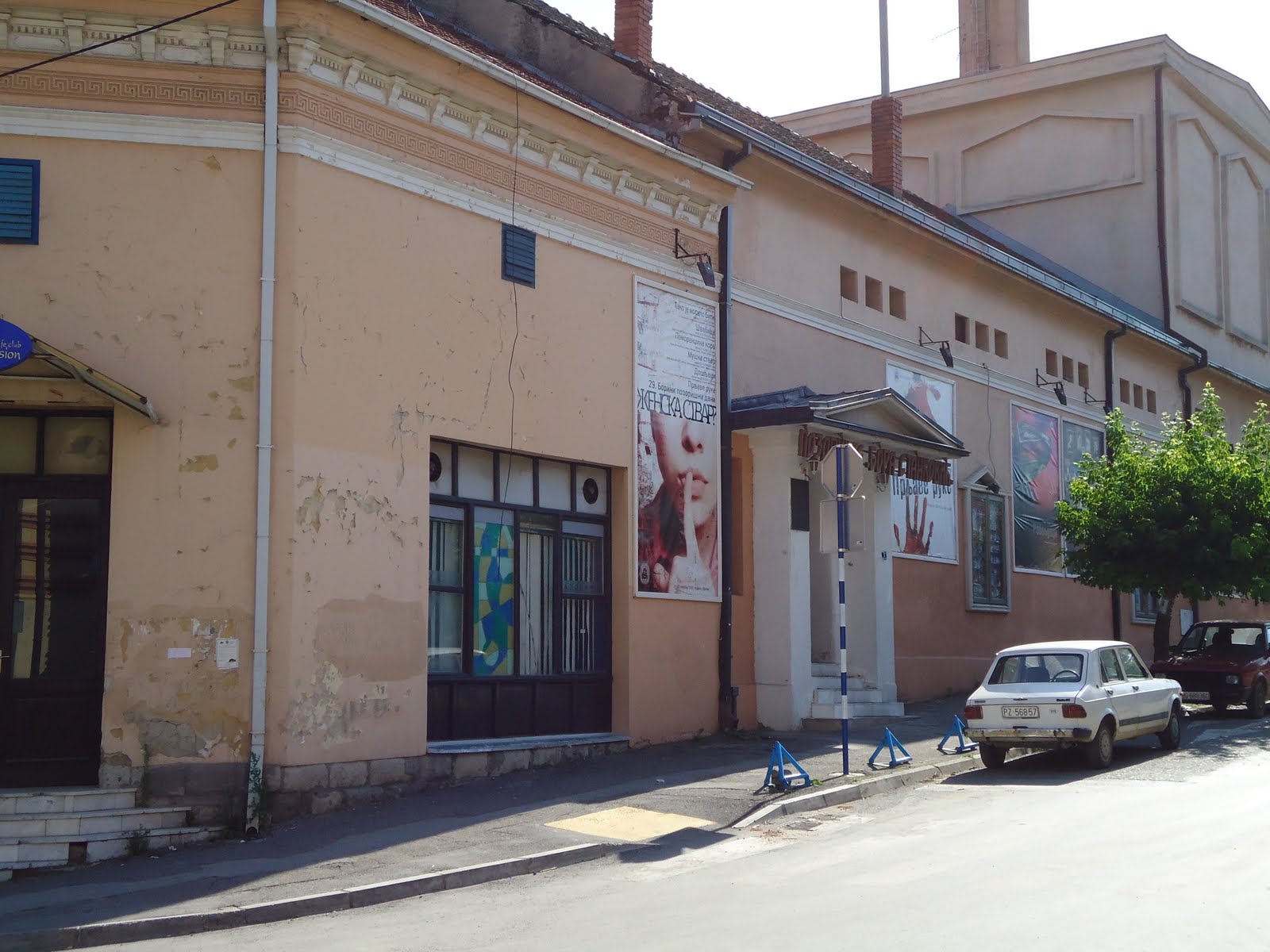
The municipality building in the center of the town
Interesting house with influences from theTurkish architectural style (Roma neighbourhood)
Roma neighbourhood
City museum
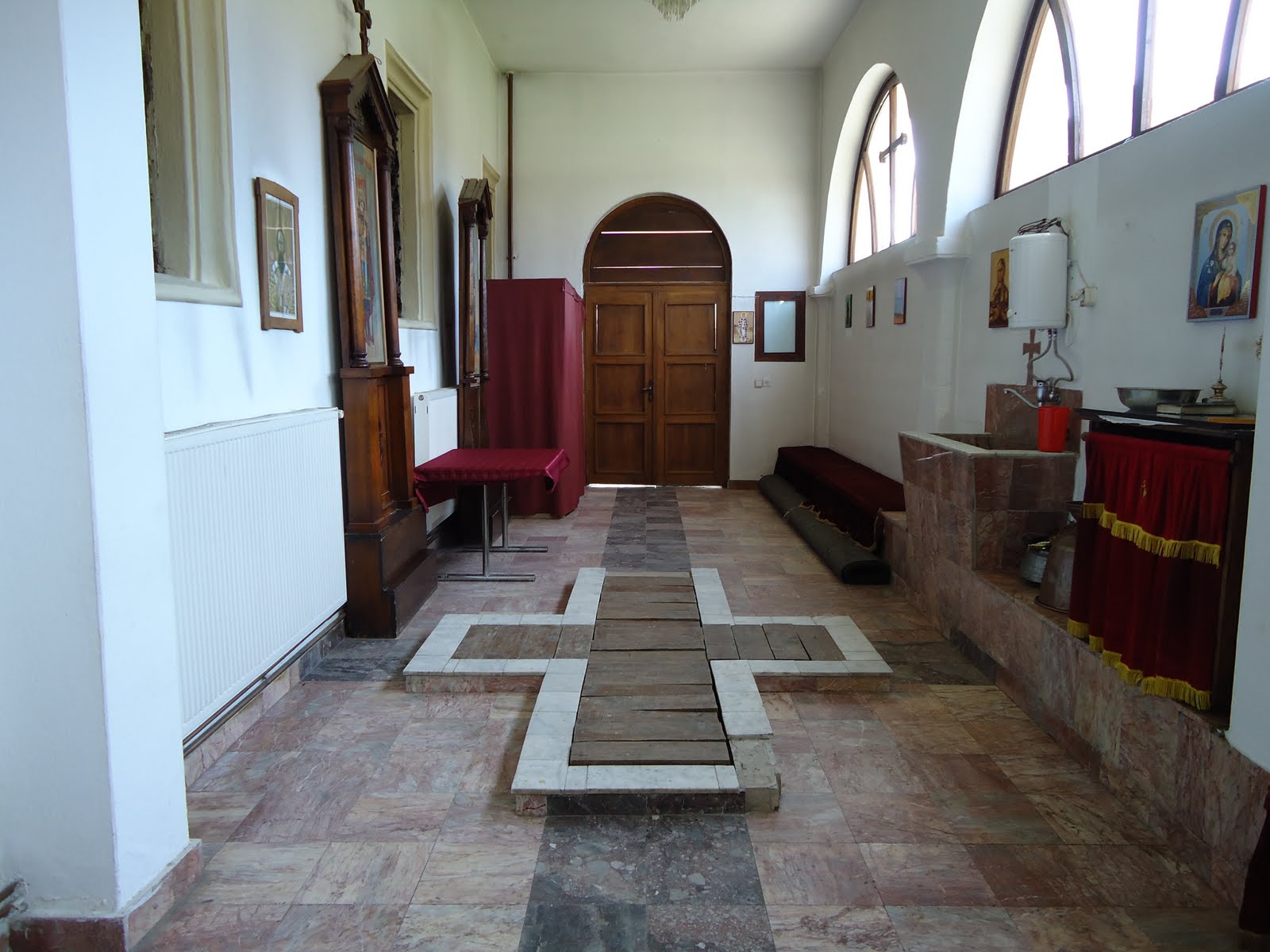
Orthodox church
Hamam (Influence from the Ottoman Empire)
The municipality building in the center of the town
Interesting house with influences from theTurkish architectural style (Roma neighbourhood)
Roma neighbourhood
City museum
Map of the city
Orthodox church
Tuesday, 20 April 2010
First impressions!
After travelling during more than 20 hours, I finally arrived in Vranje, Southern Serbia, at 12 o’clock on 16th April 2010. This is the first time I travel in the Balkans and even if I don’t have so much to say for the moment, I already have the feeling that this region has to be visited at least once in life.
Before travelling people usually got very surprised when I told that I was going to Serbia. Some of them even were worried about the war and rude and dangerous Serbian and more generally Eastern European people.
I would be lying if I told you that I have no stereotypes or any other positive or negative expectation. Human beings have a great imaginative capacity when it comes to the unknown but I prefer experiencing reality.
The trip:
8.30: Porto – Madrid
12.15: Madrid – Sofia
Arrival: 16.20
Until then everything went normaly except the passports control at the arrival in Sofia airport.
The taxi from the airport to Sofia’s Central Bus Station was just a tourist trap! Do not ever accept taxi rides when you are not sure that these are official airport taxis. 89 Leva (45 Euros) is the price I paid for about 7 kilometres distance.
When I arrived at the station I lost like an hour to find the right place where I had to take the bus to Skopje where I was going to meet the responsible person for my European Voluntary Service. When arriving at the Macedonian border everybody stepped out of the bus so the police could check the luggage and passports.
Being so used to the EU and the freedom of movement it provides to European citizens I must confess that it took me some minutes to understand what was going on.
We lost more than one hour in the border because in just a few meters of space our luggage and passports were checked two times: one by the Bulgarian police, and the other one by the Macedonian police.
When I finally arrived in Skopje I was warmly welcomed by Gordana in her beautiful apartment and we travelled together by bus to Vranje the day after in the morning.
Vranje is a small and quite city, located in southern Serbia, at around 80 kilometres from Skopje and 260 kilometres from Sofia. Just to give you a figure if 80 kilometres would normally be more or less 45 minutes in Portugal, it is around 2 hours here, without counting the time lost in the border. There are around 100 000 inhabitants and an important Roma community among the population. Vranje is among the regions which were under the Ottoman Empire
In this hilly, mountainous and green area people are very friendly and will do everything possible to make you have a great journey. This is at least the very first impression I have. I don’t think that I will ever feel like going back home! Let’s wait and see. And if you are interested in being updated about my experience and maybe want to know how I am doing, then check this blog quite regularly; I’ll try to be assiduous enough in posting some news :-)
Ciao!
Subscribe to:
Posts (Atom)